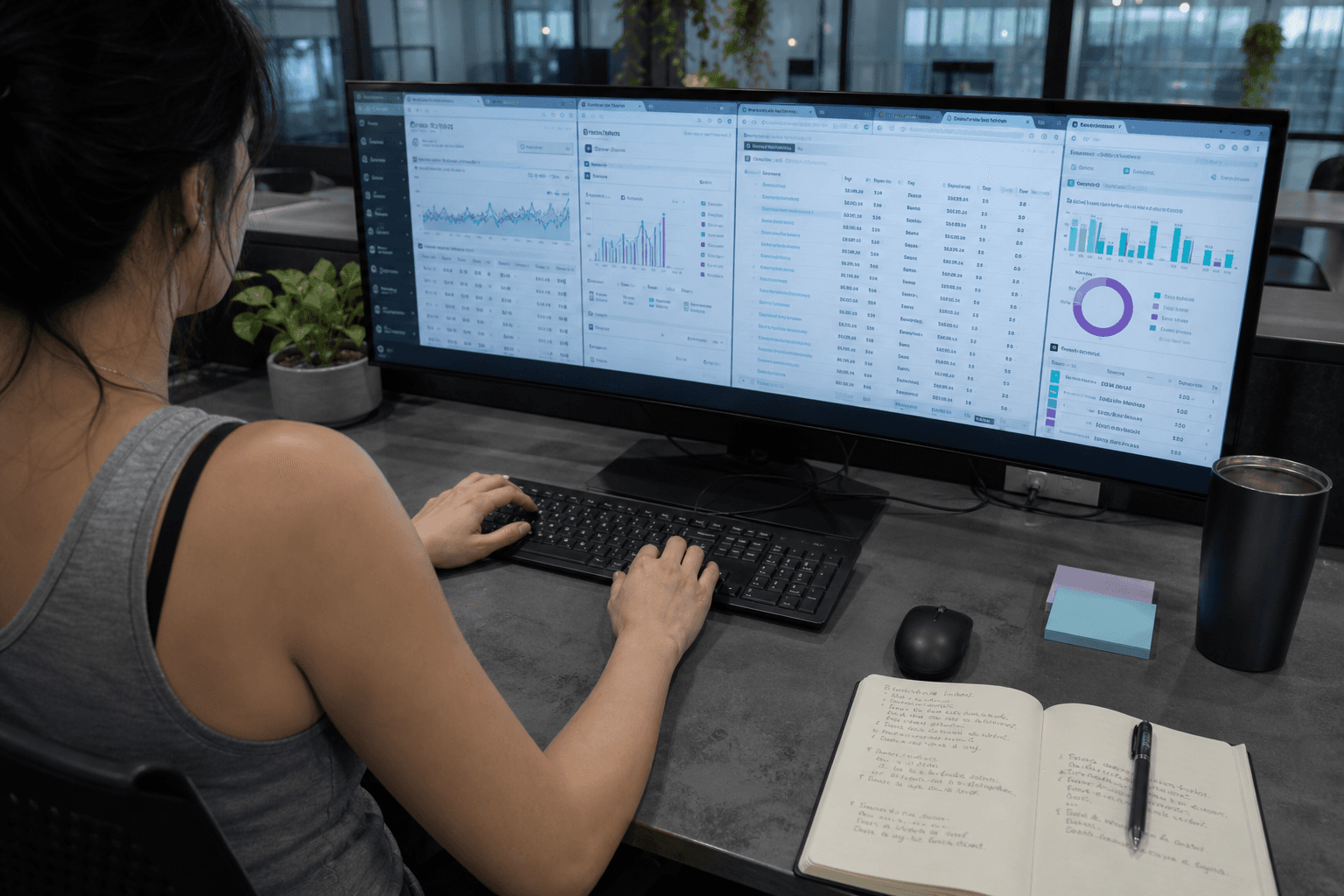
Envio Automático de Conversões Para o Google Ads
Descubra como o envio automático de leads e checkouts em tempo real para o Google alimenta o algoritmo e otimiza a entrega das campanhas.

O que é envio automático de conversões e por que muda a entrega
Envio automático de conversões é quando cada lead ou checkout que acontece na sua operação vai pro Google Ads na hora, sem você tocar em nada. O algoritmo recebe o sinal em tempo real, entende quem converteu e ajusta a entrega pra buscar mais gente parecida. Quem faz isso na mão, exportando conversão e subindo de tempos em tempos, entrega dado velho e atrasado pro Google. E dado atrasado otimiza campanha atrasada.
A lógica é simples: o Google só sabe otimizar com o que você conta pra ele. Se você conta pouco, ou conta tarde, ele entrega pior.
Por que o processo manual não escala
Na prática, o que rola é o seguinte: você tem que ficar marcando conversão o dia inteiro. Lead entrou, marca. Checkout aconteceu, marca. Faz isso pra uma conta só e já é chato. Faz pra cinco contas rodando ao mesmo tempo e você não tem mais dia.
Aí entra o problema. O operador que roda pesado não tem tempo de ficar subindo planilha de conversão pro Google. E quando finalmente sobe, já perdeu horas de sinal. O algoritmo passou o dia otimizando no escuro.
Quem opera sabe: conversão que chega atrasada vale menos. O Google usa esse sinal pra decidir pra quem mostrar seu anúncio nas próximas horas. Se ele recebe o dado só no fim do dia, já rodou o dia inteiro sem saber quem era seu público real.
Como o envio em tempo real alimenta o algoritmo
Com API oficial, dá pra puxar dado direto do Google (gasto, performance da campanha, número de conversões) e também mandar dado de volta na hora. O caminho é de ida e volta.
Quando um lead converte, o sinal sobe na hora. Quando o checkout acontece, sobe também. O Google recebe os dois eventos separados e entende melhor o funil: quem só virou lead e quem foi até o final.
Esse detalhe importa mais do que parece. Marcar só a conversão final deixa o algoritmo com metade da foto. Marcar lead e checkout dá pro Google um mapa mais completo de quem interessa pra você. Ele passa a caçar gente com perfil de comprador, não só de curioso que preenche formulário.
Lead e checkout são sinais diferentes
Um lead diz pro Google "essa pessoa tem interesse". Um checkout diz "essa pessoa comprou". São intenções distintas, e o algoritmo trata cada uma de um jeito.
Se você só manda lead, o Google otimiza pra volume de leads. Vem lead barato e ruim. Se você manda o checkout também, ele entende o que é lead que vira venda. Aí a entrega muda de figura.
Otimização contínua sem babá
O ganho real do envio automático não é economizar clique. É manter o algoritmo abastecido o tempo todo, sem depender de você lembrar de subir dado.
O Google precisa de volume de conversão pra sair da fase de aprendizado e estabilizar a entrega. Campanha que recebe sinal picado, meio dia sim meio dia não, demora mais pra estabilizar e gasta mais caro no meio do caminho. Fluxo contínuo de conversão encurta esse aprendizado.
Com o dado subindo em tempo real, você para de babá de planilha e volta a fazer o que importa: testar oferta, ajustar criativo, decidir onde colocar verba. A automação cuida do braçal repetitivo, a estratégia continua sendo sua.
E do lado da publicação, o mesmo raciocínio
Envio de conversão é metade da conta. A outra metade é conseguir subir volume de campanha rápido o bastante pra alimentar esse ecossistema de dados. Não adianta ter sinal chegando limpo se você leva a manhã inteira montando conjunto no braço.
É aqui que a coisa engrossa pra quem roda multi-conta. Subir 80 variações em cinco contas no Gerenciador, uma por uma, some com o seu dia e ainda abre porta pra erro de naming e de segmentação. No Meta Ads, esse gargalo de publicação é onde plataformas como o DirectAds resolvem a duplicação em paralelo entre BMs, montando estrutura tipo 1-50-1 em minutos e sem erro de setup. A conversão você deixa fluindo automática; a publicação em massa deixa de ser o gargalo.
A IA só é boa se for alimentada com dado real
Tem uma diferença entre IA que otimiza no vácuo e IA que otimiza com informação de mercado. O algoritmo do Google não está adivinhando. Ele decide com base no que você entrega de conversão.
Quando o sinal chega completo e no tempo certo, a otimização deixa de ser chute estatístico e vira decisão baseada em quem de fato comprou de você. Não basta ser IA. Tem que ser IA abastecida com dado que reflete seu mercado e sua oferta. Aí ela trabalha a seu favor.
Takeaways
- Configure envio automático de conversão via API oficial pra o Google receber sinal em tempo real, não no fim do dia.
- Marque lead e checkout separados: o algoritmo precisa dos dois eventos pra entender quem só tem interesse e quem compra.
- Mantenha o fluxo de conversão contínuo pra encurtar a fase de aprendizado e estabilizar a entrega mais rápido.
- Tire o trabalho braçal do caminho (envio de conversão e publicação em massa) pra sobrar tempo de decidir oferta, criativo e verba.
Perguntas frequentes
Envio automático de conversão substitui o pixel do Google?
Não. O envio via API complementa a marcação. Ele garante que a conversão chegue completa e em tempo real, incluindo eventos que o rastreamento no navegador às vezes perde por bloqueio ou perda de cookie.
Preciso enviar lead e checkout ou só a venda basta?
Envie os dois. O lead diz ao Google que há interesse, o checkout diz que há compra. Com os dois sinais, o algoritmo entende seu funil inteiro e passa a caçar perfil de comprador em vez de só volume de lead.
Quanto tempo o Google leva pra otimizar com esses dados?
Depende do volume de conversão. Fluxo contínuo e em tempo real encurta a fase de aprendizado. Sinal picado ou atrasado faz a campanha demorar mais pra estabilizar e gastar mais caro nesse meio-tempo.
O envio automático funciona pra qualquer tipo de campanha?
Funciona pra campanhas com objetivo de conversão, que dependem de sinal de evento pra otimizar. Quanto mais limpo e rápido o dado chega, melhor a entrega, independente do nicho.