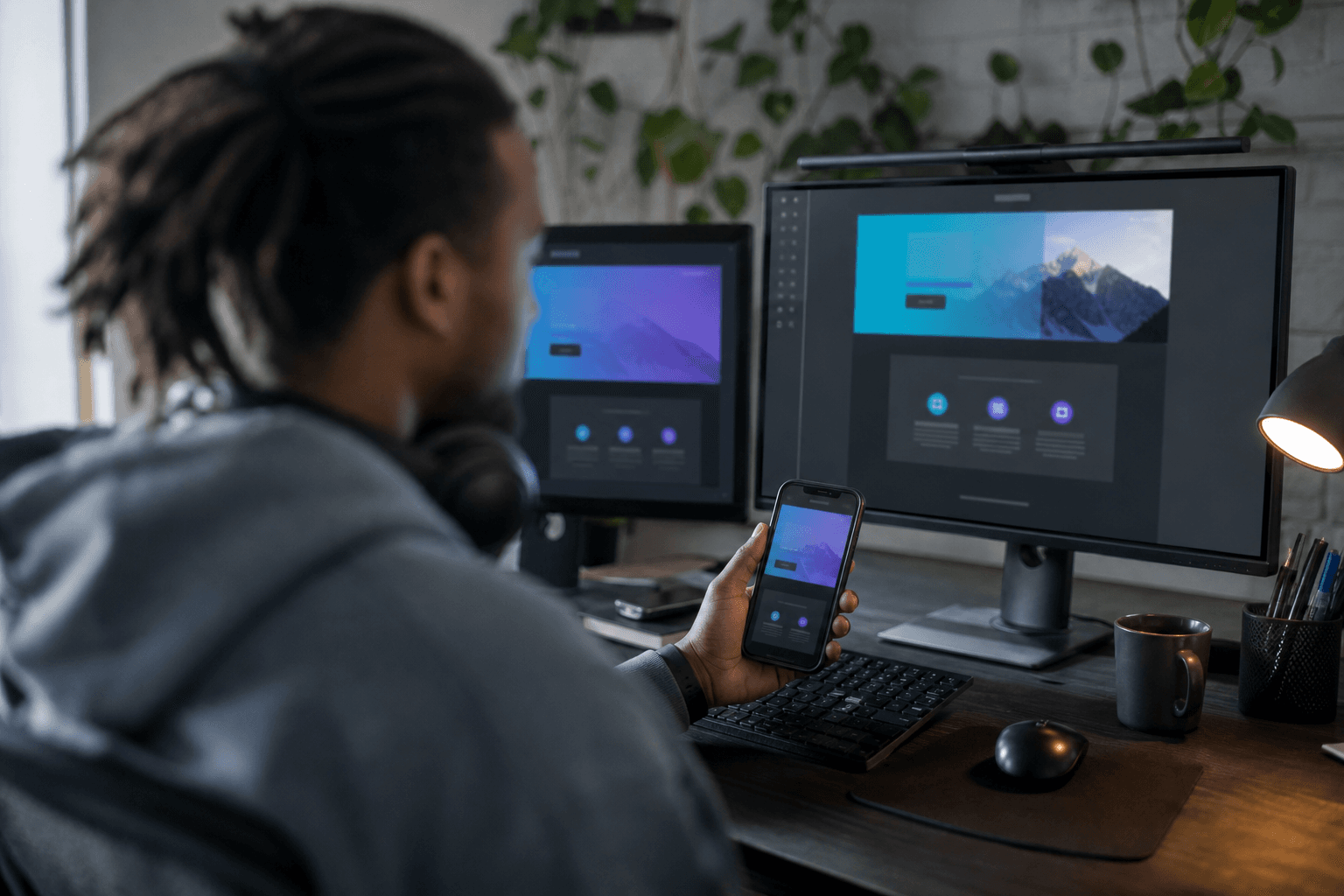
Portfólio e entrega de sites com templates prontos
Como usar templates prontos e IA para montar portfólio, validar propostas e entregar sites e quizzes para negócios locais sem saber programar.

Como montar portfólio sem nunca ter entregado um site
Você fecha uma reunião com um dentista e ele faz a pergunta óbvia: cadê seus trabalhos? Aí trava. Não tem cliente antigo, não tem case, não tem nada pra mostrar. A saída é usar template pronto por nicho como portfólio. Você seleciona um modelo de página feito pra clínica odontológica, manda pro cara e apresenta como algo que já produziu. Não é mentira: a página existe, tá pronta, funciona. Você só está validando sua produção antes de ter histórico.
Esse é o pulo do gato pra quem quer vender site e estrutura digital pra negócio local sem experiência. O portfólio não precisa vir de trabalho passado. Precisa vir de algo que você consegue mostrar na tela, agora, e que faz o profissional imaginar o resultado dele mesmo.
Template por nicho vira autoridade na primeira conversa
Quando você abre um banco de templates decente, não tem só "um site genérico". Tem modelo separado por segmento: clínica, dentista, nutricionista, oftalmologista, advogado, eletricista, restaurante. Cada um já com a linguagem, as seções e os elementos que aquele nicho espera.
Isso muda a dinâmica da venda. Você não chega falando "sei fazer site". Você chega com a página do nicho dele já montada na tela e fala: esse aqui é um modelo que eu criei pra dentista. O sujeito olha, se reconhece, e a confiança sobe antes de você citar preço.
O objetivo dessa primeira etapa é um só: validar sua produção com a pessoa. Ganhar a confiança pra ela acreditar que você entrega. Depois que ela acredita, o resto da conversa flui.
Personalizar a página com IA sem saber programar
O template puro já vende. Mas o ticket sobe quando você personaliza. E aqui não precisa abrir editor de código nem saber uma linha de HTML.
A IA faz o trabalho pesado de adaptação. Você pega o modelo de clínica, joga o nome do consultório, o tom da comunicação, os serviços que o dentista oferece, e a ferramenta reescreve o texto, ajusta as chamadas, arruma a estrutura. O que era genérico vira sob medida em minutos.
Na hora da venda isso vira argumento de upsell direto. Funciona assim: você manda o template pronto e fala que aquele modelo custa R$ 500. Aí completa: tenho versões mais personalizadas, dá pra fazer algo sob demanda pro seu consultório. O cliente entende que existe um degrau acima e você acabou de criar espaço pra cobrar mais.
Faz a conta. Vende o modelo base de R$ 500 pra dez profissionais e são R$ 5.000. Isso sem nenhuma customização pesada, só entregando o template certo pro nicho certo.
Quiz de qualificação: a oferta de maior ticket
Site é a porta de entrada. O que sobe o valor de verdade é o quiz de qualificação.
A ideia é simples de explicar pro cliente. Você monta um quiz onde o paciente responde perguntas antes de agendar. Esse quiz faz três coisas ao mesmo tempo: qualifica o paciente, captura o lead e faz a pessoa chegar muito mais preparada na consulta. O dentista deixa de atender curioso e passa a atender gente que já entrou no funil respondendo o que ele precisa saber.
Pro profissional de saúde, isso vale ouro. Um procedimento odontológico pode custar R$ 20.000. Se o quiz trouxer um paciente qualificado no ano inteiro, ele já pagou o investimento e ainda lucrou. É esse cálculo que você coloca na mesa.
Um quiz desse foi vendido por R$ 6.000 pra um dentista. Sem gestão de tráfego, sem operação de mídia, sem nada além da estrutura entregue. O dentista viu o valor de qualificar quem entra na agenda e pagou.
Você não precisa ser especialista em marketing pra vender isso. Você está digitalizando o profissional, e está mesmo, entregando estrutura de captação e qualificação que ele não tinha. Tem modelo de quiz pronto por tipo de profissional, então de novo o trabalho é adaptar, não criar do zero.
Por que a entrega rápida ganha da agência
A vantagem competitiva aqui é grosseira de tão grande.
Uma agência cobra entre R$ 3.000 e R$ 5.000 por um site e leva 30 dias pra entregar. Você chega cobrando R$ 1.000 ou R$ 2.000 e entrega em 24 horas. Preço menor, prazo absurdamente menor, e ainda assim margem gorda porque o template já estava pronto e a IA fez a personalização.
O negócio local não quer esperar um mês. O dentista quer resolver a presença digital dele essa semana. Quem entrega amanhã com preço justo fecha antes de a agência mandar o orçamento.
E não para no site. Depois que você entregou a página, ganhou a confiança e mostrou que cumpre prazo, o quiz de R$ 6.000 fica muito mais fácil de propor. A venda de ticket alto vem em cima de uma entrega rápida e barata que já provou seu valor.
Takeaways
- Use template pronto do nicho do cliente como portfólio: mostra na tela, ele se reconhece, a confiança sobe antes de você falar de preço.
- Venda o modelo base barato (R$ 500) e abra o degrau da personalização com IA pra puxar o ticket pra cima.
- Ofereça o quiz de qualificação como produto de valor alto: qualifica paciente, captura lead e justifica R$ 1.000 a R$ 6.000 pelo retorno de um único cliente novo.
- Bata na entrega em 24 horas contra os 30 dias da agência: prazo e preço menores fecham a venda antes do concorrente responder.
Perguntas frequentes
Preciso saber programar pra entregar esses sites?
Não. O template já vem pronto e a IA faz a personalização de texto e estrutura. Seu trabalho é escolher o modelo do nicho e adaptar as informações do cliente.
Como mostro portfólio se nunca entreguei nada?
O próprio template funciona como portfólio. Você seleciona a página pronta do nicho, apresenta como um modelo que produziu e usa isso pra validar sua produção com o cliente.
Quanto dá pra cobrar por um quiz de qualificação?
Depende do valor que ele gera pro profissional. Pra dentista, onde um procedimento chega a R$ 20.000, dá pra cobrar de R$ 1.000 a R$ 6.000, porque um único paciente novo já paga o investimento.
Por que o cliente escolheria eu no lugar de uma agência?
Preço e prazo. Agência cobra R$ 3.000 a R$ 5.000 e leva 30 dias. Você entrega em 24 horas por R$ 1.000 ou R$ 2.000. O negócio local não quer esperar um mês pra ter presença digital.