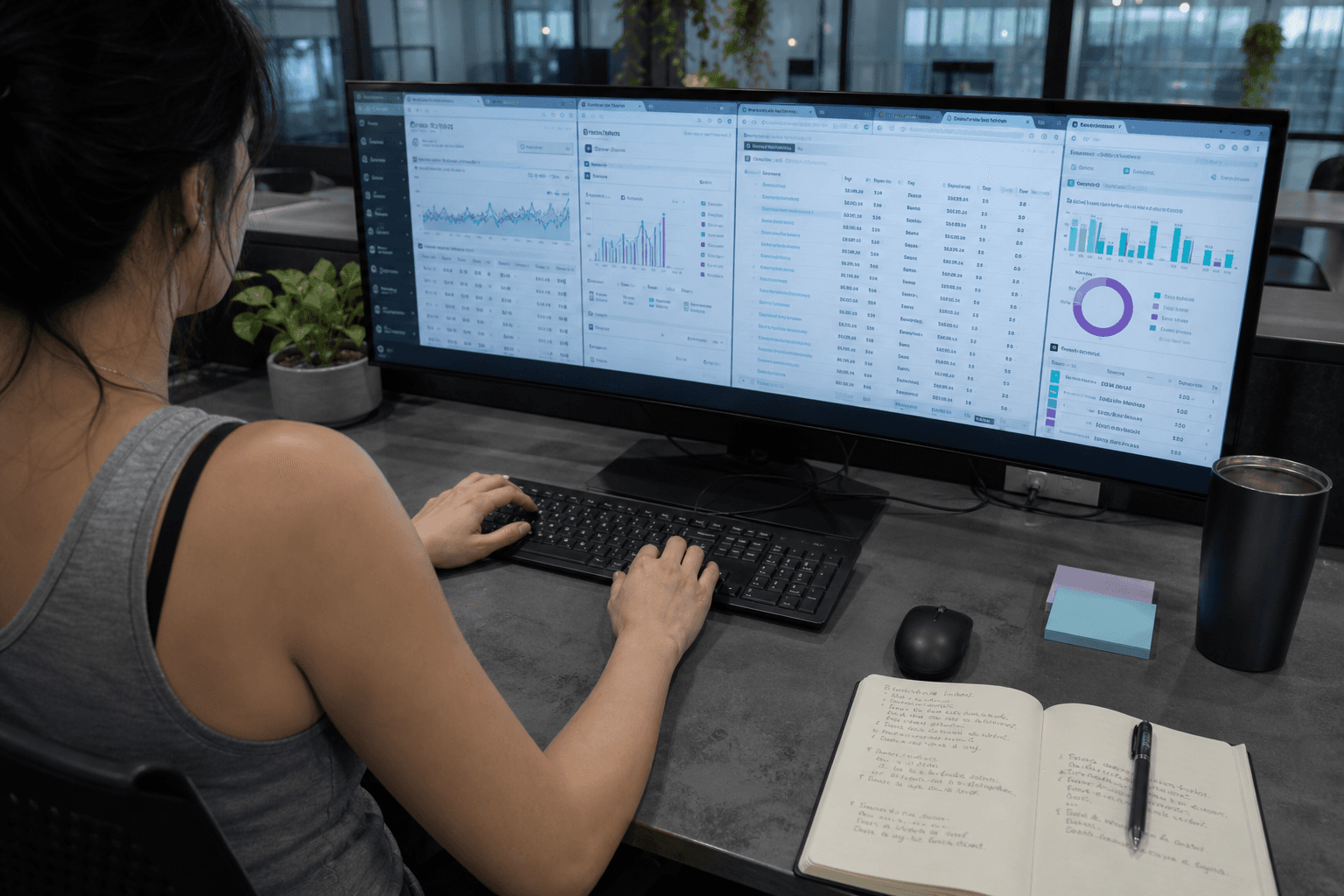
Rotina e Disciplina do Gestor de Tráfego na Escala
Entenda por que o gestor de tráfego que escala precisa estar sempre conectado, checar a conta a cada duas horas e nunca deixar a operação desassistida.
A verdade que ninguém fala sobre escalar no Meta Ads
Quem escala de verdade não dorme oito horas seguidas. A rotina do gestor de tráfego na escala é acordar a cada duas horas pra checar a conta, andar com o notebook do lado em qualquer lugar e nunca deixar a operação desassistida no horário que gasta. Não é frescura. Um CPA estourando às 3 da manhã enquanto você dorme é dinheiro literal saindo da mesa.
Essa é a parte que os cursos não mostram. Escalar não é só saber montar campanha. É disciplina de plantão.
Por que checar a conta a cada duas horas?
Porque o Meta muda o jogo o tempo todo. Um criativo satura, um conjunto que estava com CPA saudável começa a sangrar, uma conta de anúncio cai. Se você só vê isso quando acorda, já perdeu horas de gasto ruim.
Quem está sozinho escalando não tem essa margem. O cálculo é simples: cada segundo que passa com CPA fora do alvo é verba queimada que não volta. Aí quando você abre a conta de manhã, o ROAS já despencou e você passa o dia inteiro tentando recuperar o que perdeu numa noite.
No começo, sozinho, é assim mesmo. Vira a vida do avesso. A pessoa que aguenta esse ritmo por alguns meses é a mesma que consegue fazer dinheiro de verdade antes de montar time.
O notebook do lado, sempre
O comportamento é esse: onde você for, o notebook vai junto. Cinema, almoço de domingo, viagem. Não importa.
O motivo é operacional. Se acontece alguma coisa você precisa poder agir na hora: subir orçamento, trocar o criativo que saturou, mudar a conta de anúncio que bloqueou. Não dá pra esperar chegar em casa. A janela de reação no Meta é curta.
Parece exagero pra quem olha de fora. Pra quem opera, é sobrevivência. A gestão de tráfego é o 80/20 de uma operação de Direct Response. É o braço que decide se a operação vive ou morre no mês.
Como montar turnos pra cobrir a conta o dia todo
Quando a operação cresce, uma pessoa não dá conta. Aí entra a divisão de turnos entre gestores, feita pra ninguém dormir na operação e ainda assim todo mundo conseguir descansar.
Um modelo que funciona:
- Turno principal: um gestor toca das 8 ou 9 da manhã até meia-noite.
- Turno corujão: outro gestor pega da meia-noite até 4 ou 5 da manhã.
- Janela desassistida: só das 5 às 8, horário que historicamente quase não gasta.
A lógica é cobrir onde tem verba rodando e aceitar deixar de fora só a faixa morta. Ninguém precisa ficar acordado 24 horas, mas a conta nunca fica sozinha no horário que importa.
Montar essa estrutura de turno exige que cada gestor consiga replicar setup e subir campanha rápido no plantão dele, sem refazer configuração na mão de madrugada. É o cenário onde um fluxo de upload em lote como o do DirectAds tira o atrito de reconstruir campanha do zero durante o corujão.
Redundância de internet: a operação não pode parar
Parece detalhe, mas derruba operação. Se cai a internet no meio de uma escala, você fica cego enquanto a verba continua rodando.
Por isso gestor sério tem redundância. Um bom gestor roda com três conexões em casa: uma via satélite (Starlink), uma fibra de qualidade e uma internet top no celular como backup. Se uma cai, a outra segura.
Não dá pra ficar parado numa operação que gasta cinco dígitos por dia porque a operadora deu problema. A conta não espera o técnico chegar.
O gestor é o maior braço da operação
Existe muito gestor que quer o salário e a comissão sem querer o plantão. Não aguenta a pressão, some no meio do dia, deixa CPA estourar.
O estrago é real. Um gestor que sumiu o dia inteiro numa operação estourou todos os CPAs e derrubou o ROAS pra zero. Um dia. Isso não pode acontecer quando a gestão é o braço que sustenta tudo.
Por isso a conversa na contratação é direta: dá pra perguntar antes se o cara aguenta a pressão, porque a cobrança vai existir. É melhor perder o candidato na entrevista do que perder a operação num plantão largado.
Comissão vem, mas depois de provar
Gestor bom tem que receber bem. Comissão sobre resultado é o certo, porque alinha o interesse dele com o da operação.
Mas a ordem importa. Primeiro você mostra que é faca na caveira, que aguenta o ritmo e entrega. Chegar negociando comissão antes de provar valor é começar errado. O reconhecimento (e a grana boa) vem depois que o resultado aparece.
Takeaways
- Cheque a conta em intervalos curtos no horário que gasta. Cada hora de CPA fora do alvo é verba perdida.
- Ande com o notebook do lado sempre, pra agir na hora quando o criativo satura ou a conta cai.
- Monte turnos intercalados quando tiver time, cobrindo o dia todo e deixando desassistida só a faixa morta.
- Tenha internet redundante. A operação não pode parar porque uma conexão caiu.
Perguntas frequentes
Preciso mesmo acordar de madrugada pra checar campanha?
No começo, sozinho e escalando, sim. Enquanto não tem time pra dividir turno, a conta fica desassistida quando você dorme. Quando cresce, você monta plantão intercalado e recupera o sono.
Qual o horário que menos gasta no Meta?
Historicamente a faixa das 5 às 8 da manhã é a mais morta na maioria das operações de DR. É a única janela que dá pra deixar sem cobertura sem perder muito. Confirme com os dados da sua conta antes de assumir.
Vale a pena pagar comissão pro gestor?
Vale, e é o certo pra alinhar interesse com resultado. Mas o gestor precisa provar que aguenta a pressão e entrega antes de negociar a comissão. Reconhecimento vem depois do resultado, não antes.
Por que ter mais de uma internet em casa?
Porque uma conexão que cai no meio da escala te deixa cego enquanto a verba roda. Redundância (satélite, fibra e celular) garante que você nunca fica offline num momento crítico da operação.