Tempo de Tela: Como o Gestor de Trafego Desenvolve Feeling
Entenda como o tempo de tela cria o feeling do gestor de trafego e como transformar essa intuicao em metodo replicavel para o time.
O que é tempo de tela na gestão de tráfego
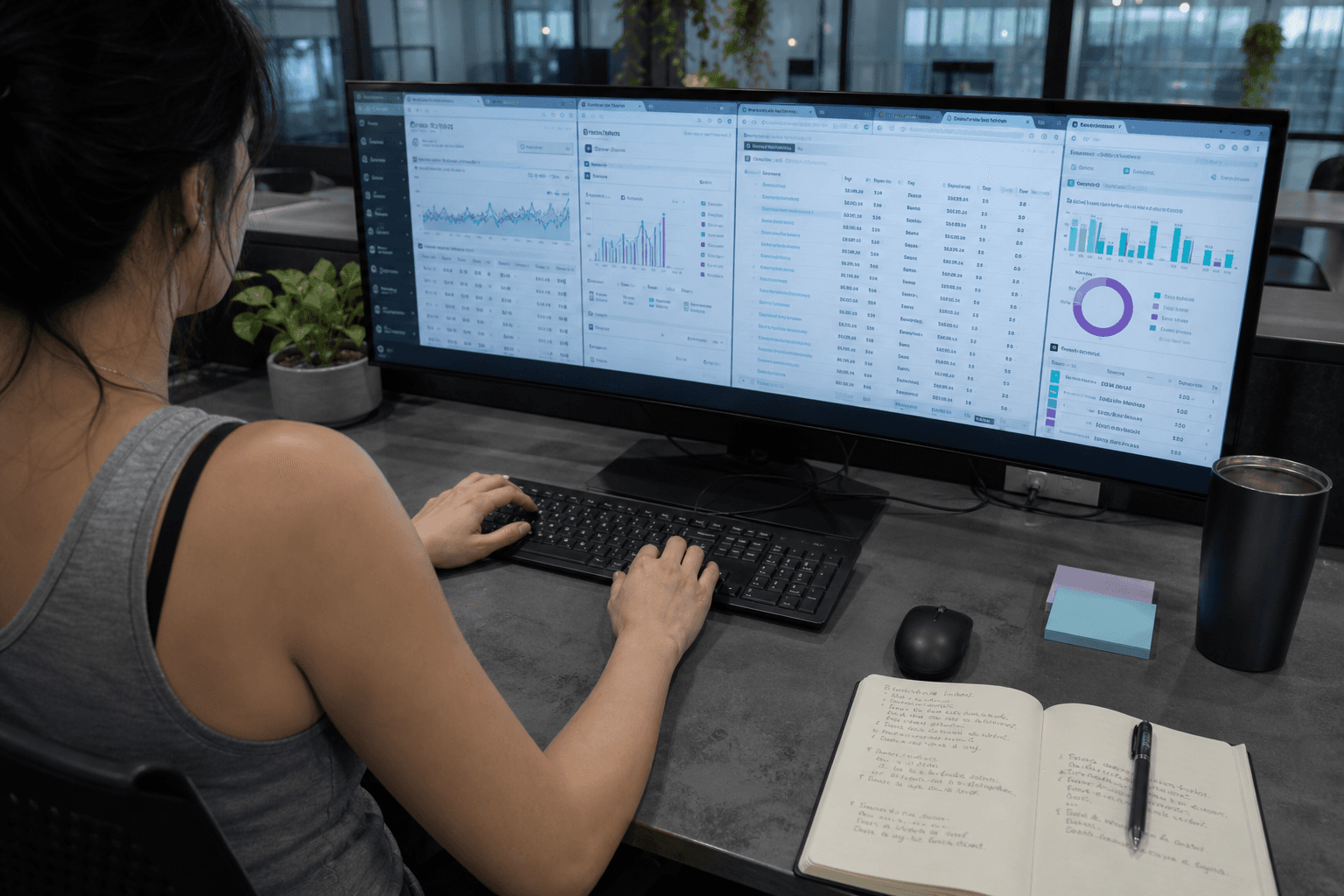
Tempo de tela é o total de horas que o gestor de tráfego passa dentro do Gerenciador de Anúncios olhando conta rodando de verdade, tomando decisão com dinheiro na mesa. Quanto mais tempo de tela, mais rápido você mapeia as decisões do dia a dia: pausar um criativo que já deu o que tinha que dar, escalar outro que começou a puxar, cortar um conjunto antes de queimar verba. O que muita gente chama de dom, na prática é repertório acumulado.
E repertório não cai do céu. Vem de ver muita conta, muito criativo, muito funil completo, o suficiente pra você começar a reconhecer padrão antes do número fechar.
Por que tempo de tela vira feeling
O feeling é a leitura rápida que o gestor experiente faz sem pensar muito. Ele olha um painel e já sabe que aquele criativo não vai virar. Olha outro e sente que vale colocar mais verba. Parece intuição. Não é.
Funciona assim: cada vez que você acompanha uma campanha do início ao fim, seu cérebro guarda um caso. CPM subiu, CTR caiu, CPA disparou, você pausou. Deu certo pausar? Guardou. Cem casos desses e você tem um banco de dados na cabeça. Da próxima vez que o padrão aparece, você reage em segundos.
O ponto é que isso é método disfarçado de intuição. Você não nasceu sabendo. Aprendeu com o tempo de tela, caso a caso. E se aprendeu, dá pra escrever, pra estruturar, pra passar adiante.
O gestor bom olha o funil inteiro, não só o tráfego
Aqui entra a parte que separa o gestor mediano do gestor que escala. O mediano olha a métrica da própria caixinha: CPC tá tanto, CPM tá tanto, tá bom. Trava aí.
O gestor bom olha o macro. Ele acompanha desde o anúncio que apareceu no celular do cliente até a venda acontecer e o pós-venda rolar. Porque CPC baixo não paga boleto. Você pode ter o clique mais barato do nicho e uma página que não converte, e aí o tráfego perfeito virou prejuízo.
Então a leitura vai muito além do painel de mídia:
- O criativo que está rodando: ele fala com a oferta ou está descolado?
- A jornada depois do clique: página, checkout, funil.
- O CPA real contra o ticket, não o CPC isolado.
- O que acontece com o cliente depois da compra.
Quem só olha a métrica de tráfego enxerga metade do jogo. O feeling de gestor bom nasce justamente de conectar as pontas: anúncio, criativo, oferta, venda, retenção.
Como transformar feeling em método mapeável
Essa é a parte onde a coisa engrossa. O feeling já está na sua cabeça, rodando no automático. Mas quando você senta pra escrever tudo que sabe fazer intuitivamente, trava. Existe um vale ali entre o que você faz e o que você consegue explicar.
Mapear o próprio feeling é chato e trabalhoso, e por isso quase ninguém faz. Mas é o que separa o gestor que fica preso na operação do gestor que constrói time.
Começa simples. Toda vez que você tomar uma decisão importante numa conta, anota três coisas: o que você viu, o que você decidiu, e o que aconteceu depois. Duas semanas fazendo isso e você já enxerga seus próprios critérios aparecendo no papel.
Exemplo: "CPA passou 1,5x da meta e frequência acima de 3? Pauso o conjunto." Isso era feeling. Agora é regra escrita, que qualquer pessoa do time consegue seguir.
O que era leitura invisível vira checklist. O que era dom vira processo. E aí você para de ser o único gargalo da operação.
Como passar o feeling pro time
O gestor evolui quando começa a transferir a leitura pra outras pessoas. Não adianta ter o melhor feeling do mercado se ele mora só na sua cabeça. No dia que você tira férias, a operação para.
Passar feeling pro time é pegar aquele banco de casos mental e transformar em regra clara. Critério de pausa, critério de escala, o que olhar antes de mexer em orçamento, quando esperar e quando cortar. O time novo não tem seus dez mil casos acumulados, então você entrega o resumo em forma de regra até ele construir o próprio repertório.
Tem um detalhe operacional aqui. Quando o time cresce e você começa a rodar volume em várias contas, o gargalo deixa de ser só decisão e passa a ser execução. Subir 60 variações testando ângulo em cinco BMs na mão consome o tempo de tela que deveria ir pra leitura estratégica. É o cenário onde uma plataforma de fluxo de upload em lote multi-conta tira o trabalho braçal, e o gestor volta a gastar tela onde importa: lendo funil e treinando a equipe.
Quanto antes você decide, mais resultado
O cálculo é simples: quanto mais rápido você pausa um criativo ruim ou escala um bom, mais dinheiro sobra no fim do mês. Cada dia rodando um criativo furado é verba jogada fora. Cada dia demorando pra escalar um vencedor é venda que você deixou na mesa.
Tempo de tela acelera essa decisão porque encurta o tempo entre ver o padrão e agir. O gestor iniciante espera o número fechar pra ter certeza. O experiente já leu o sinal três dias antes e mexeu. Essa diferença de velocidade, repetida em dezenas de campanhas por mês, é o que aparece no resultado final.
Takeaways
- Acumule tempo de tela com propósito: acompanhe campanhas do anúncio até o pós-venda, não só o painel de mídia.
- Anote toda decisão relevante (o que viu, o que fez, o que aconteceu) e transforme seu feeling em regra escrita.
- Olhe o funil inteiro, porque CPC baixo com página ruim é prejuízo, não vitória.
- Passe seus critérios de pausa e escala pro time como checklist, pra você deixar de ser o único gargalo.
Perguntas frequentes
Quanto tempo de tela preciso pra desenvolver feeling?
Não existe número fixo, mas é questão de meses acompanhando contas reais com verba de verdade rodando. O que acelera não é o tempo em si, é a quantidade de casos completos que você vê e processa. Anotar decisões encurta bastante essa curva.
Feeling é dom ou dá pra aprender?
Dá pra aprender. É repertório acumulado de casos, não talento nato. Qualquer gestor que passa tempo suficiente lendo funil completo e testando decisão desenvolve. A parte difícil não é ter, é conseguir escrever pra passar adiante.
Por que não basta olhar CPC e CPM?
Porque essas métricas contam só o começo da história. Você pode ter o clique mais barato do nicho e mesmo assim perder dinheiro se a página não converte ou o ticket não paga o CPA. O gestor bom conecta tráfego, criativo, oferta e venda.
Como começo a transferir meu feeling pro time?
Começa registrando suas próprias decisões por duas semanas: o que você viu, o que decidiu, o resultado. Seus critérios vão aparecer no papel. Transforme cada um em regra clara (critério de pausa, critério de escala) e entregue como checklist pro time seguir enquanto constrói o próprio repertório.